
Victor Smart |June 7, 2023
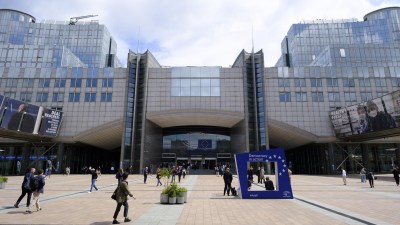
| Tense negotiations between the EU Council, European Parliament and European Commission over the coming months will decide whether financial institutions fall within the scope of the EU’s proposed corporate sustainability due diligence directive (CSDDD). On 1 June, members of the European Parliament (MEPs) approved the parliament’s position on the proposed CSDDD ahead of trilogue negotiations between the parliament, council and the commission. Notably, the parliament opted to include the financial industry in the scope of the proposed directive, in contrast to the position adopted by the council. The proposed CSDDD, if it passes into law, will require companies operating in the EU with more than 250 employees and a turnover of more than €40m to screen their value chains for human rights abuses and environmental harm. Where necessary, these companies must prevent, end or mitigate adverse impacts of their activities in areas such as child labour, exploitation of workers, pollution and biodiversity loss. Non-EU companies with a turnover higher than €150m will also be included if at least €40m of this was generated in the EU. In addition, such companies would also be required to implement climate transition plans in line with the Paris agreement. Large companies (with more than 1000 employees) will be required to link directors’ variable remuneration to company performance against their climate transition plan. The parliament’s approved text also requires directors to have a “duty of care” for their company’s due diligence over human rights and the environment. This is watering down of a previous draft which would have given directors more clearly defined legal oversight responsibilities. Under the directive, non-compliant companies would be liable for damages and could be sanctioned by national supervisory authorities, including fines of up to 5% of global turnover. There will be some exceptions for financial services — while banks, insurers and investors would all be included in its scope, pension funds, private equity funds and ratings agencies are expected to be excluded. Political battle lines Unlike the parliament, the council believes that individual national governments should decide domestically whether banks and financial services firms are covered by the directive. Kim Rybarczyk, counsel at law firm Linklaters, comments: “Lengthy negotiations are expected due to the contentious nature of the draft directive, including the inclusion of financial services, which was expressly flagged following the vote as a point of debate given that the parliament and council positions are very far apart.” The parliament’s assent to a compromise package on the directive, in the face of significant opposition from centre-right MEPs to several aspects of the package, was generally welcomed by civil society and environmental groups. “Overall, we’re quite happy with the text approved by parliament,” said Aleksandra Palinska, executive director of Eurosif, an association which advocates for “more responsible and sustainable finance”. Vincent Vandeloise, senior research and advocacy officer at not-for-profit Finance Watch, says: “With CSDDD, we are not just saying firms need to be transparent. We are saying that they need to have a business model that is aligned with the Paris Agreement — this is something quite revolutionary in sustainable finance.” Tricky negotiations The parliament, council and the commission each enter the trilogue with marked differences in emphasis. Not only does the council want individual member states to decide on the inclusion of the financial sector, it wants to narrow the impact to services that directly result in an allocation of capital or in the coverage of risk through insurance or reinsurance. The broader political backdrop around sustainability issues within the EU is also becoming more challenging. Amid claims that EU firms are being put at a competitive disadvantage compared to Chinese rivals, the parliamentary vote faced fierce opposition from the centre-right European People’s Party. Significantly, the French president Emmanuel Macron also spoke in May of the need for the EU to take a “regulatory break” in green laws, arguing that the EU has already done far more than other jurisdictions. The financial sector may also lobby for there to be changes to the scope of the text before it is finalised. The European Banking Federation, for example, has previously argued that banking subsidiaries should be explicitly exempted. Even those following the EU trilogue closely find it difficult to guess the outcome. Overturning parliament’s decision on the inclusion of the financial sector and giving individual member states the choice could play well politically for some national leaders, but it could create regulatory fragmentation and would represent a weakening of a high-profile sustainability policy. Some observers say it could even spark a race to the bottom with states seeking to lighten the burden of oversight on their national firms. “Giving individual states the choice would result in market fragmentation,” Palinska notes. “If each country has different options it could become a nightmare. And a lot of firms are operating in many countries or are global so it becomes quite difficult.” |
 Victor Smart